
Criminal Court Records in Swift County
A criminal court record is the court's working file for a criminal case. In Swift County, the case belongs to District Court once the prosecutor files the charge, and Court Administration keeps the court record. That file can show the complaint, later filings, hearing history, plea, verdict, sentencing, and the final disposition. It is different from a jail roster entry because the roster focuses on custody, while the criminal case file focuses on the court process.
Swift County District Court handles the local criminal docket, and the county does not have a separate municipal or justice court in the official sources reviewed. That means the district court record is the main local record for misdemeanors, gross misdemeanors, felonies, probation matters, and criminal hearings filed in the county. The file can be read online through MCRO, but the official certified copy still comes from the local court office.
The public criminal-history search at Minnesota Public Criminal History Search is the public statewide background-style tool, while the court file is the district court record. They answer different questions. The public history search summarizes eligible criminal-history information; the court file shows the actual case timeline.
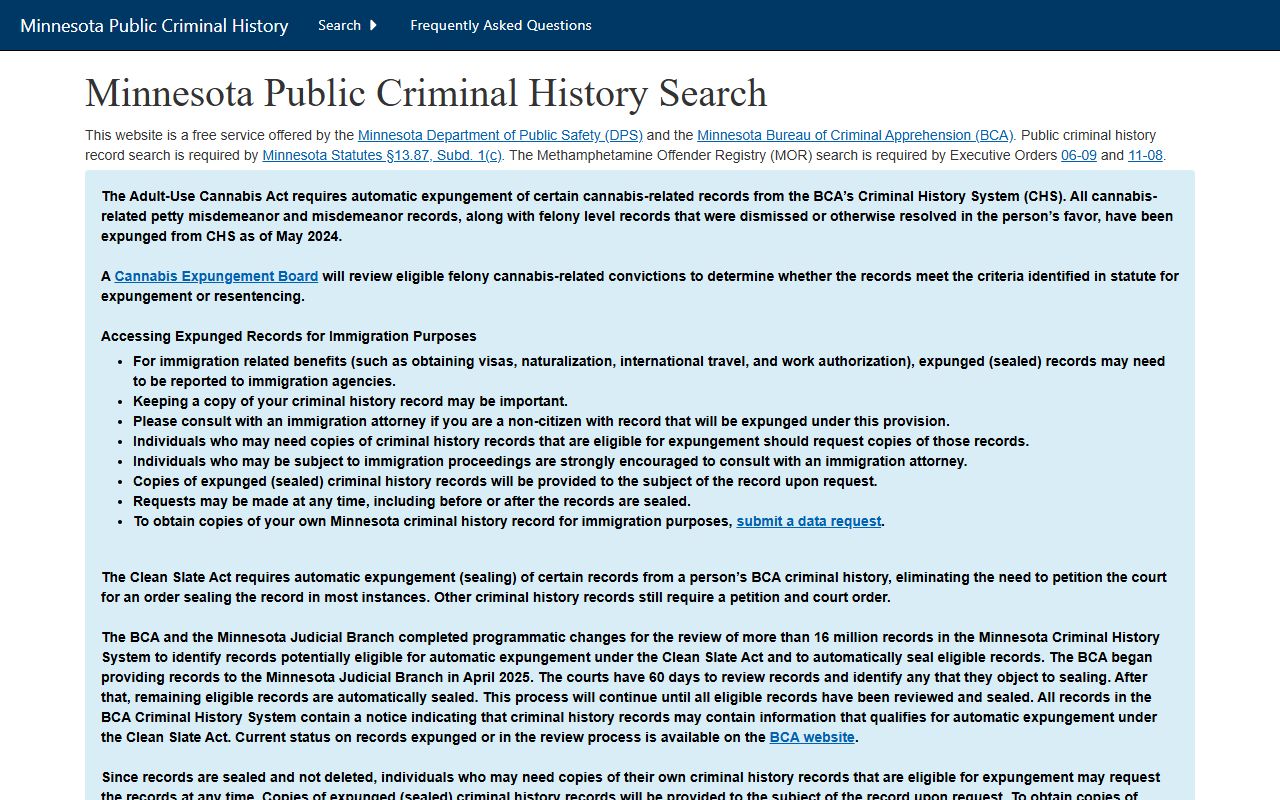
That image is a useful reminder that statewide criminal-history access exists outside the court file. It helps separate the summary search from the actual Swift County criminal case record.
How to Search Swift County Criminal Court Records
Use MCRO Case Search when the goal is to find a criminal case by name, case number, citation number, or attorney name. The search works best when the user already knows whether the case is active or closed, but a broad search can still show the current public case file. For criminal cases, a case-number search is stronger than a name search because some pending cases do not return by defendant name until the record reaches a later stage.
- Open MCRO Case Search and choose the correct tab.
- Search by defendant name, citation number, or case number.
- Select Swift County when narrowing the county filter.
- Open the result and read the register of actions and public documents.
- Use Court Administration for certified copies or courthouse-only records.
Pending criminal, traffic, and petty misdemeanor cases with no conviction may not return in name search results. That is an important limit for Swift County users who search by defendant name only. If the case number is known, the record is easier to find and easier to verify.
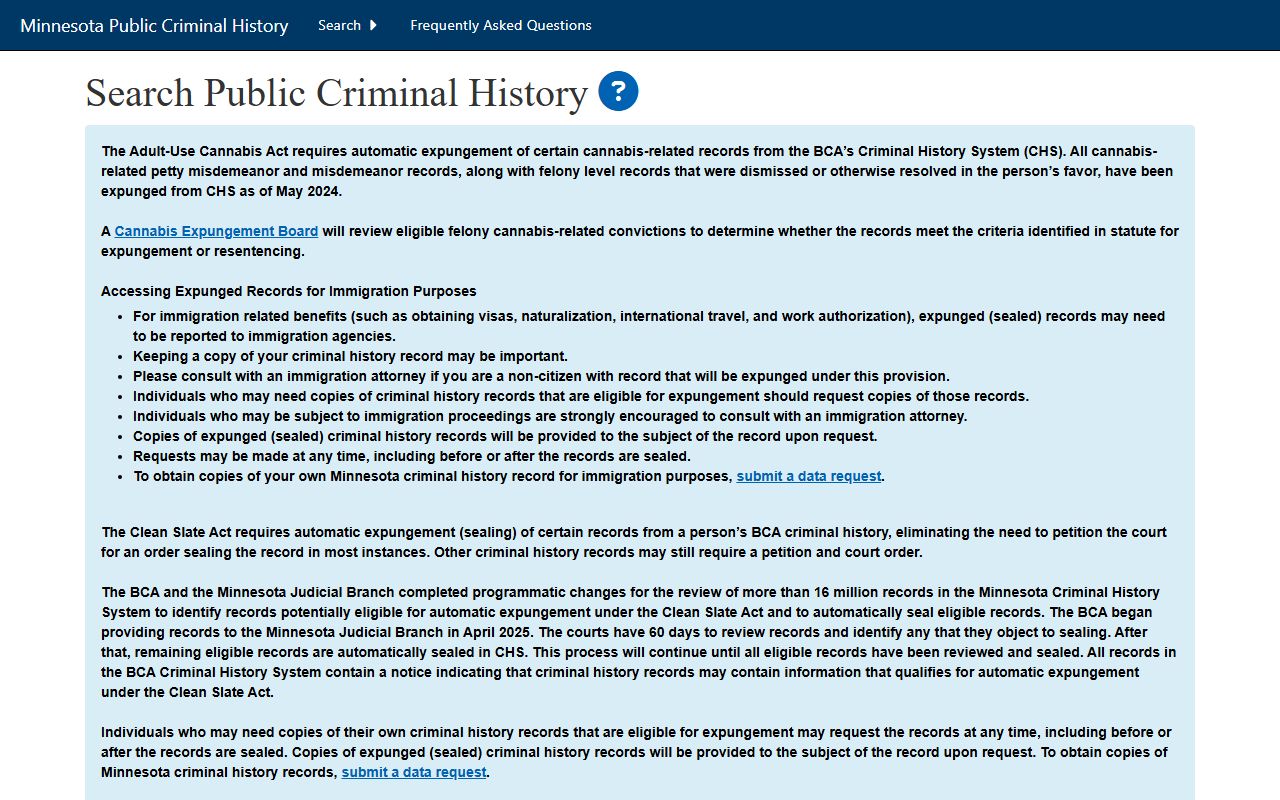
The BCA offender-search screen belongs in the research path because it is a separate state tool. It is useful for history checks, but it is still not the same as the court file.
Stages of a Criminal Case
The criminal case file grows in stages. The prosecutor files the charge, the court sets the first appearance, and the file then records the decisions that follow. A Swift County case can move through arraignment, motions, plea discussions, trial, disposition, and sentencing. Each stage leaves a different kind of paper trail, which is why a docket or calendar entry is not enough when someone needs the complete case history.
Case flow: Charges Filed › Arraignment › Pretrial / Motions › Plea or Trial › Disposition › Sentencing
| Stage | What Happens |
|---|---|
| Arraignment | The court advises the defendant of the charge and takes an initial plea or appearance step. |
| Pretrial / Motions | The parties address evidence, scheduling, continuances, and other case-management issues. |
| Plea or Trial | The case is resolved by plea agreement or through a trial before the court or jury. |
| Sentencing | The court enters the punishment or conditions after a conviction or other disposition. |
The criminal case file is the place where those steps are preserved. The jail roster may show custody and charges, but the court file is where the case moves from accusation to final result.
What a Swift County Criminal Court Record Shows
The criminal case file gives the formal record of what happened after the charge was filed. It is more detailed than a criminal-history summary because it can show the actual case number, the parties, the charge list, hearing dates, motions, plea, disposition, and sentence. It can also show whether a charge was amended or dismissed, which matters because a criminal record can contain more than one outcome over the life of the case.
| Field | What It Shows |
|---|---|
| Case Number | The district court file number, often in Swift County's 76-CR format. |
| Defendant | The person charged in the criminal case. |
| Charges | The offense names, statute references, and charge level. |
| Plea | How the defendant answered the charge, such as guilty, not guilty, or another plea. |
| Disposition | The outcome or current procedural status of the case. |
| Sentence | The punishment or court-ordered conditions entered after conviction. |
The Minnesota public criminal history offender search is the other public path users often compare against the court file. It can show a statewide history summary, but it does not replace the full Swift County case record.
That offender-search screen is useful for a public history check, but the court file remains the better source for the procedural details of a single Swift County criminal case.
Charges vs. Convictions
Being charged is not the same thing as being convicted. A criminal court record can show a charge that was later amended, reduced, dismissed, or ended in an acquittal. Swift County users should read the file carefully because the court may record several events before the final result is reached. A conviction only appears after a guilty plea or a guilty verdict, while a charge can exist long before the court reaches that outcome.
| Charge | Conviction | |
|---|---|---|
| Stage | Accusation | Verdict or plea |
| Burden of Proof | Probable cause | Beyond reasonable doubt |
| Public Record | Yes | Yes |
The distinction matters in background checks, job screening, and casual searches. A court record may show the filing of a charge without showing a conviction, and a statewide criminal-history tool may summarize the history differently than the full case file does.
Sealed vs. Expunged Records
Swift County criminal records can be sealed by court order, and expungement in Minnesota means the record is sealed from public access rather than destroyed. Sealed records are hidden from the public, but they may still exist for agencies that are legally allowed to see them. That is different from a general public search result, which is why a person can sometimes find the case number but not the underlying document.
| Sealed | Expunged | |
|---|---|---|
| Visibility | Hidden from public | Hidden from public through the expungement process |
| Law Enforcement | Limited access | Limited access under law |
| Eligibility | Depends on statute and court order | Depends on Minn. Stat. section 609A.02 and related procedures |
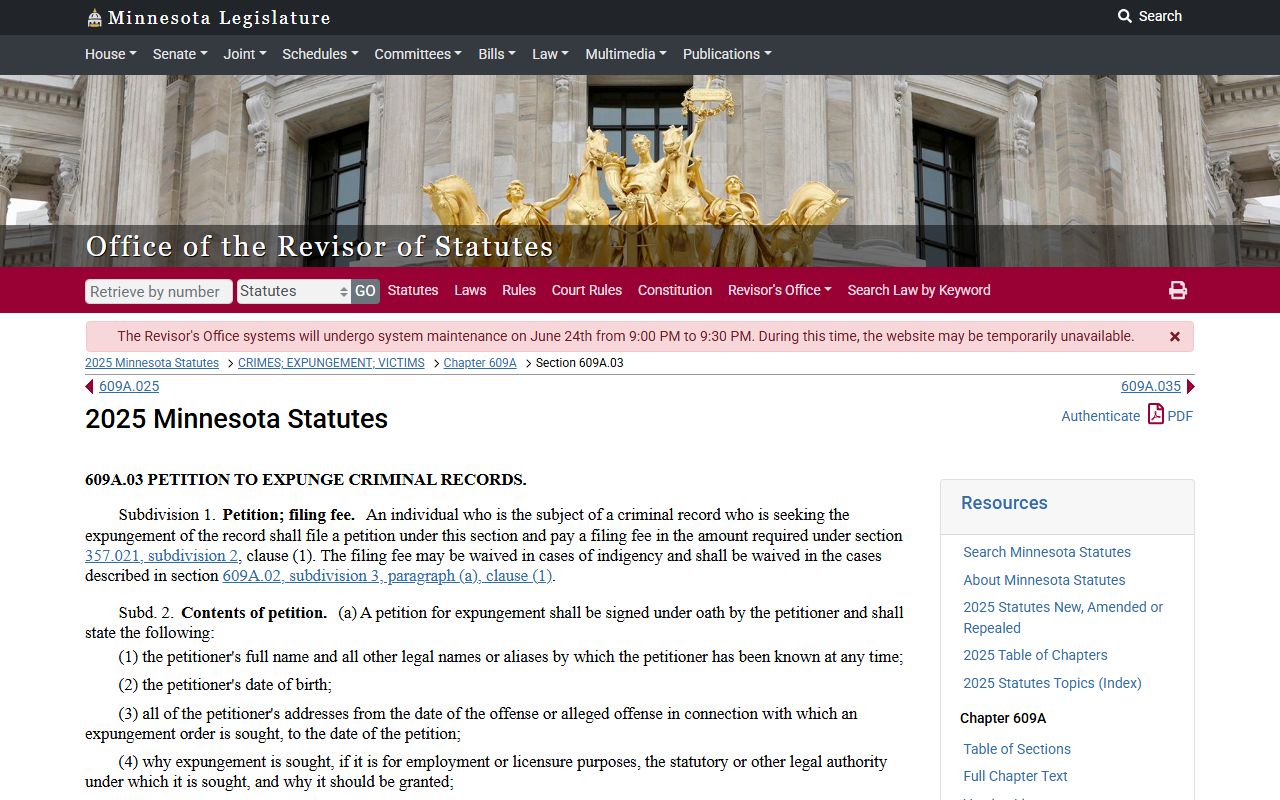
Expungement is not automatic in every case. When a person seeks relief, the court process in Minn. Stat. section 609A.03 controls the petition route. The court and the agencies that hold the record may each have different access rules, so a sealed case can still leave traces in other systems even when the public court file is restricted.
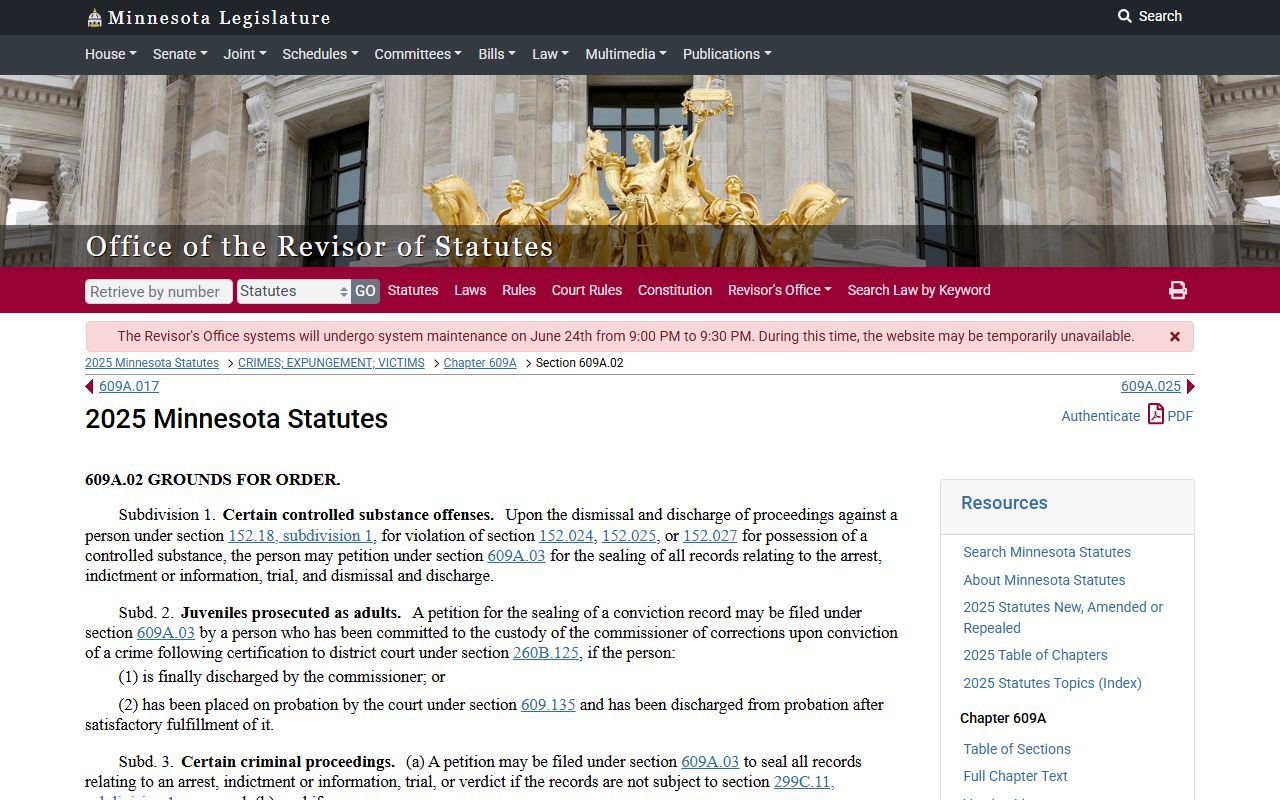
The expungement-ground image is useful because it points readers to the statute layer that controls eligibility, not just the court file itself.
Public Access to Criminal Court Records
Minnesota's court-access rules and government-data laws both matter here. Criminal court files are generally public when the law does not classify them otherwise, but the judicial branch limits what can be shown remotely online. That is why Swift County users can often search a case, yet still find that certain fields, documents, or case types are missing from the public portal.
Key Statutes:
Minn. Stat. chapter 13 and section 13.03 establish the government-data presumption of openness.
Minn. Stat. section 13.82 and section 13.87 govern law-enforcement and criminal-history data.
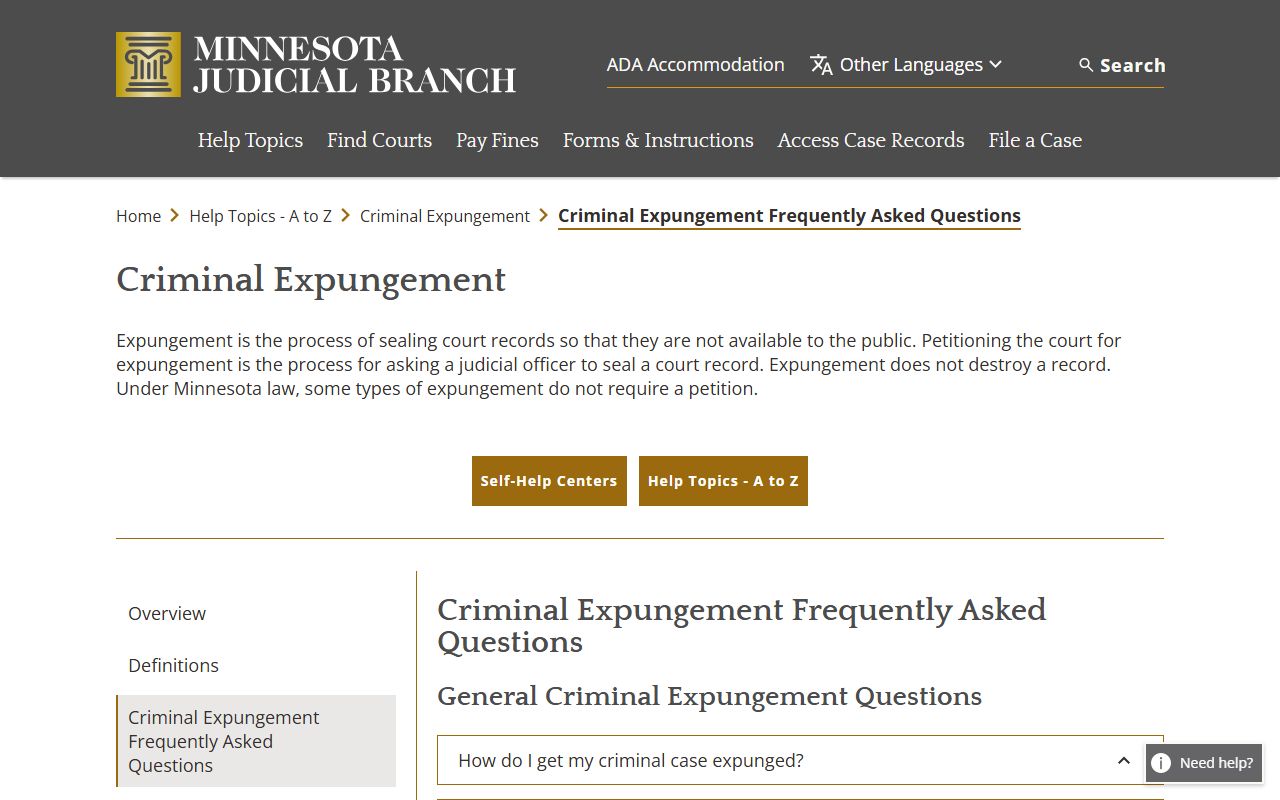
The public criminal-history FAQ at Criminal Expungement FAQ explains that criminal records are spread across courts, prosecutors, police, and state agencies. That is why the full history is not all in one place. The court file is one piece, the BCA summary is another, and law-enforcement records are another.
That FAQ image helps anchor the access rules because it is the clearest statewide explanation of how criminal records are distributed across different offices.
County Attorney and Public Defender
Swift County's County Attorney prosecutes major crimes for the state and lesser crimes outside city limits, while also handling civil matters involving the county. The office is the prosecutorial side of the criminal record, so it is important context for understanding why a charge appears in the court file. The County Attorney page also shows that the office handles child protection, civil commitment, child support, and welfare-fraud matters, so criminal work sits alongside a wider legal workload.
The public defender side is separate. The Minnesota State Law Library's Swift County referrals page lists the Eighth Judicial District Public Defender, and the Minnesota Judicial Branch provides the online public defender application. That application is the right route when the defendant needs court-appointed representation and meets the financial-eligibility rules. Swift County users should not confuse the public defender application with the criminal-history search or the court case record. They are different tools for different tasks.
Useful county and state links include Swift County Attorney, Public Defender Office Search, and Online Public Defender Application.
Restricted Criminal Court Records in Swift County
Swift County criminal records are not all equally open. Juvenile matters, sealed cases, expunged matters, and some restricted online categories are limited by law and court rule. The public portal can also hide fields or documents that are not allowed to appear remotely. When a file is sealed or expunged, the public view changes, but the underlying record may still exist for agencies that have legal access.
The expungement FAQ and the criminal-statute pages are the practical sources for understanding those restrictions. The research file also shows that a criminal-history search and a court file do not always line up one-to-one, so a person looking for a complete history may need both the court record and the statewide criminal-history summary. Court Administration remains the local office to call when the public record appears incomplete or when a certified copy is needed.
The BCA search image closes the loop because it shows the statewide summary tool that often gets used alongside the local court file.