
Swift County Arrest Records and Court Charges
In Swift County, the arrest record starts on the law-enforcement side and the court charge record starts when the prosecutor files the formal charge. The arrest record is the booking or custody side of the story. The charge record is the court-side filing that gives the case a number and moves it into district court. If the question is who is in custody, the better starting point is Inmate Records. If the question is what happened after the arrest, the criminal case file on Criminal Court Records is the better follow-up.
Swift County does not present arrest and charge information as one single all-in-one public portal. The county sheriff, the county attorney, the jail roster, and the district court each hold a different slice of the record. That is why a user may find a booking row, a charge list, and a later court disposition in different places. The page below keeps those pieces separate so the user can follow the arrest-to-charges pathway without confusing it with the full criminal case record.
The sheriff's office is the local law-enforcement source for arrest and jail matters, and the county attorney is the prosecutor who files criminal charges on the court side. Those roles are different, even though they are part of the same case flow.
How to Find Swift County Arrest Records and Charges
Start with the jail roster if the question is current custody or recent booking. Then move to the court case search if the question is the formal charge. If the case number is known, MCRO is the fastest way to verify the court file. If the case number is not known, a name search can still work, but it is less reliable for pending criminal matters.
- Check the jail roster for the booking side of the record.
- Search MCRO by name, citation number, or case number.
- Open the case and read the filed charge list and docket.
- Compare the charge record with the later criminal case file.
- Contact the sheriff, county attorney, or Court Administration when the record is not public online.
For custody details, Inmate Records stays the better place to look. For the court charge side, the case file and docket on the criminal records page show the filed charge, the hearing timeline, and the result.
How Charges Get Filed After an Arrest
Once the arrest is made, the prosecutor decides what formal charge to file. That filing can be a complaint, an information, or an indictment. The label matters because it tells the user how the case entered court and who performed the charging step. A jail booking record does not answer that question by itself. The court charge record does.
| Complaint | Information | Indictment | |
|---|---|---|---|
| Filed By | Officer or prosecutor | Prosecutor | Grand jury |
| Common For | Misdemeanors | Many felonies | Serious felonies |
| Starts | The case | The case | The case |
The charge document is the bridge between the arrest and the court file. If a searcher is only looking at the jail side, the reason for the arrest may still be incomplete until the prosecutor's filing appears in the court record.
Charge Status and What It Means
Charges do not stay fixed. They can be amended, reduced, added, dismissed, or left pending while the case moves through court. Swift County users should read the status carefully because the label on the booking row may not match the later court outcome. A charge record can show that the case changed after the arrest, and the docket may show the steps that led to that change.
| Status | What It Means |
|---|---|
| Pending | The charge is still active in the court process. |
| Amended / Reduced | The prosecutor changed the charge level or wording. |
| Dismissed | The charge was dropped and did not continue to conviction. |
| Nolle Prosequi | The prosecutor chose not to continue the charge. |
That status table is especially important when the arrest record and the criminal case record seem to disagree. They can both be accurate, but they may reflect different moments in the same case.
Charges vs. Convictions
Being charged is not the same as being convicted. An arrest can lead to one or more charges, but a conviction only happens after the court reaches a guilty result by plea or verdict. A Swift County arrest record may show the reason for custody, while the court file later shows whether the charge was dismissed, amended, or resolved by conviction. Users should treat the charge list as the starting point, not the final outcome.
| Charge | Conviction | |
|---|---|---|
| Stage | Accusation | Verdict or plea |
| Burden of Proof | Probable cause | Beyond reasonable doubt |
| Public Record | Yes | Yes |
If the user needs the final case result, the better source is the criminal case file. If the user needs the booking side and immediate custody status, the jail roster is the better source.
Sealed vs. Expunged Records
Swift County arrest and charge records can be restricted by law. Sealed records are hidden from the public, and expunged records are sealed through Minnesota's court process rather than destroyed. The practical effect is similar for a public searcher, but the legal basis matters because it controls whether the record still exists for limited lawful access.
| Sealed | Expunged | |
|---|---|---|
| Visibility | Hidden from public | Hidden from public through court process |
| Law Enforcement | Limited access | Limited access under law |
| Eligibility | Depends on statute and order | Depends on Minn. Stat. section 609A.02 and section 609A.03 |
The public criminal-history data page at BCA criminal history search is a separate statewide tool, and its rules are different from the court file. A charge can be visible in one system and restricted in another.
County Attorney and Public Defender
The county attorney is the prosecutor for Swift County. The office files and pursues criminal charges for the state, and it also handles a broader legal workload that includes civil matters, child protection, civil commitment, child support, and welfare-fraud cases. That role matters because the prosecutor is the office that turns the arrest into a formal court charge.
The public defender side is separate. A criminal defendant who cannot afford counsel may use the state public defender system and the online application process. The office search page and the application portal are both part of the access path, but they are not the same as the court file or the jail roster. The county attorney and public defender pages help the user understand who is on each side of the case.
Useful links: Swift County Attorney, Public Defender Office Search, Online Public Defender Application.
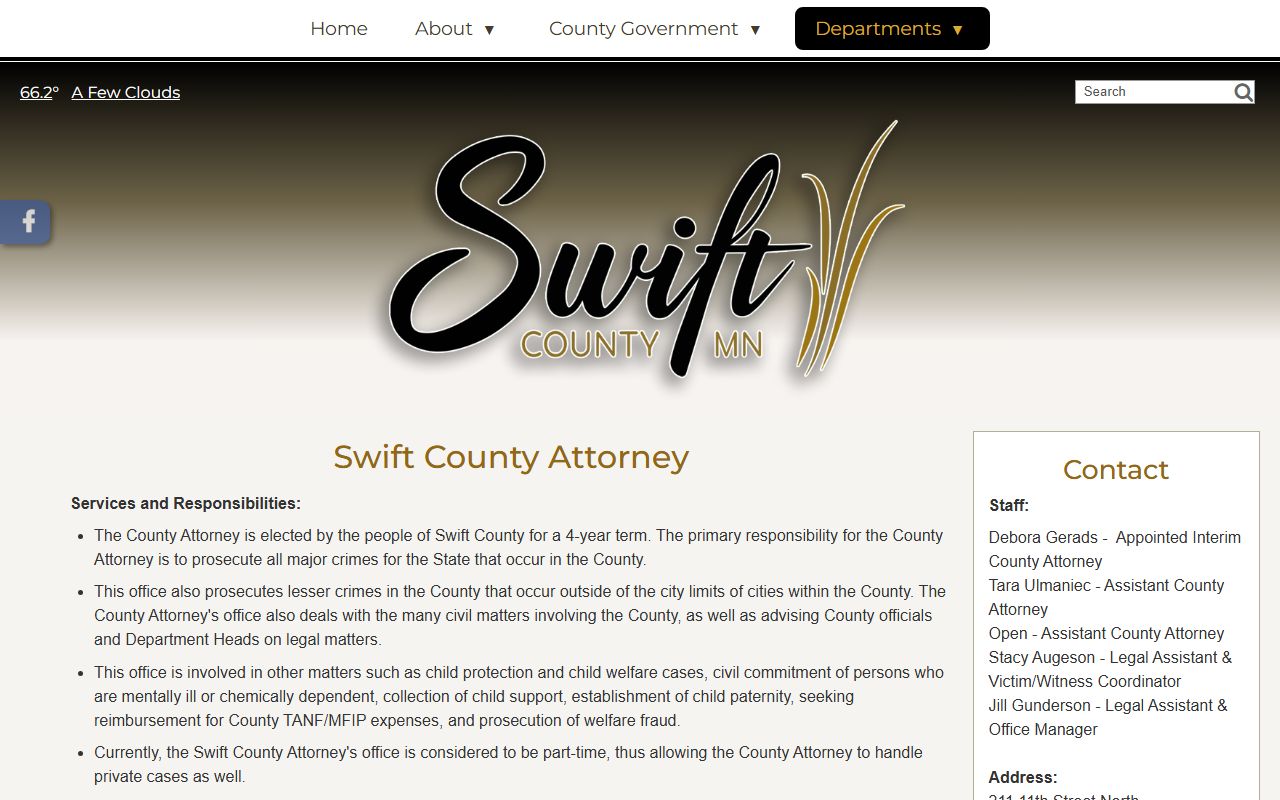
The county attorney image is the clearest local reminder that the prosecutor, not the jail, files the formal court charge after arrest.
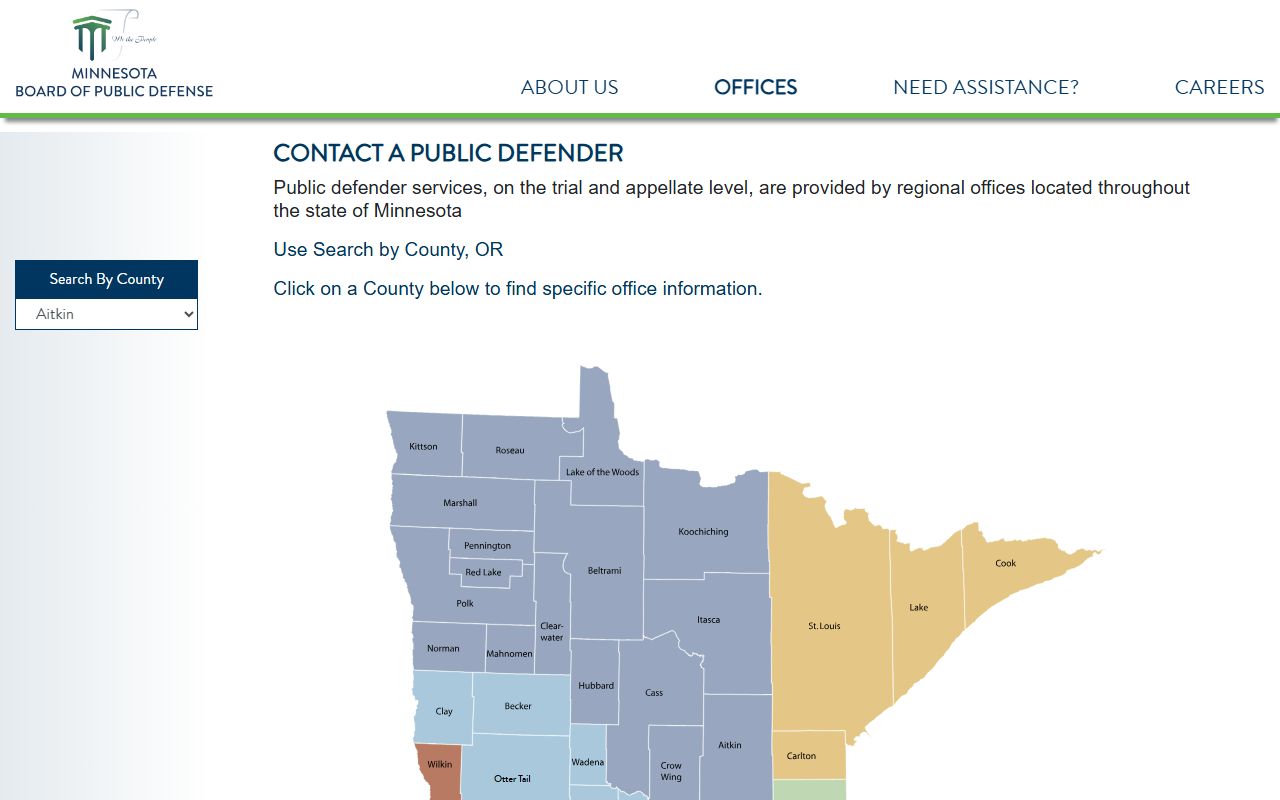
That public defender office-search image helps separate the defense-side access path from the arrest and charging records themselves.
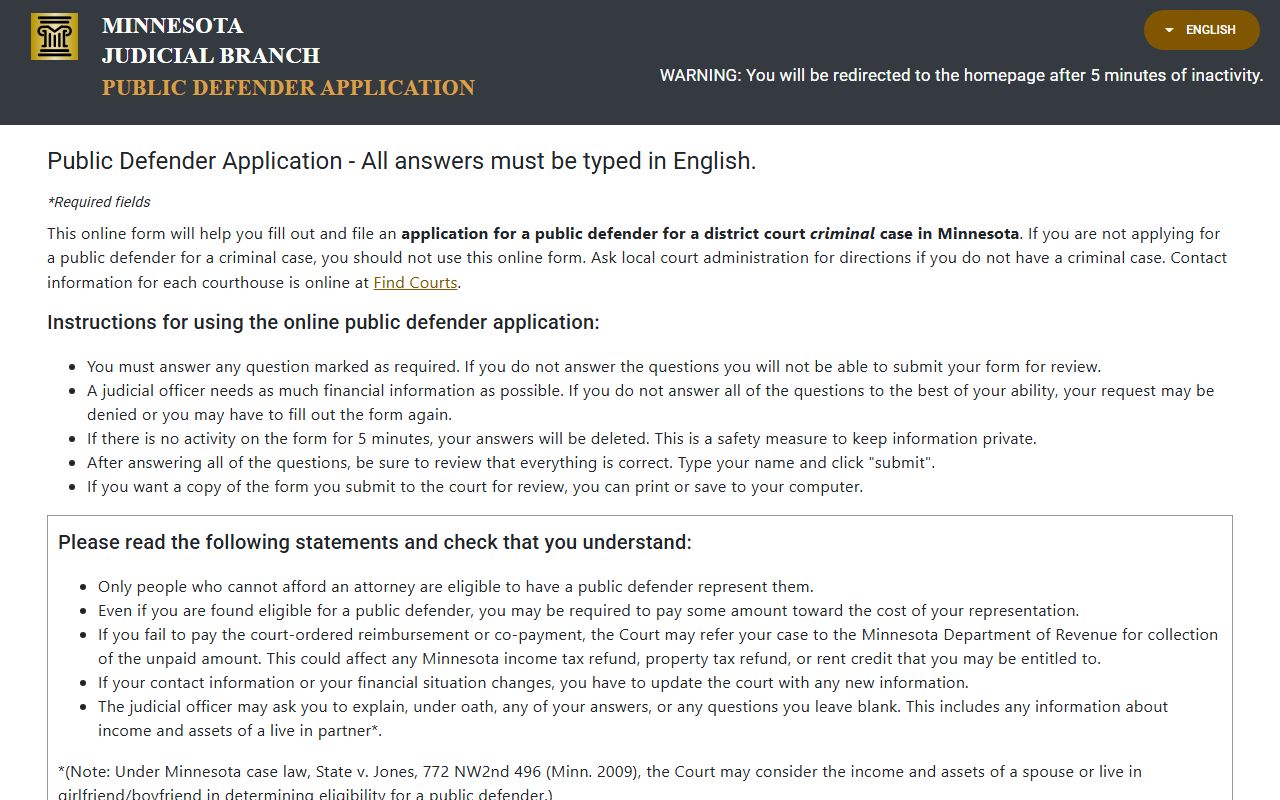
The online application image matters because it shows the actual intake step for court-appointed representation in eligible cases.
The legal-referrals image is a useful local pointer for users who need a county-specific defense reference rather than a generic statewide explanation.
Public Access and Restrictions
Swift County arrest records and charge records are not all public in the same way. Law-enforcement data and criminal-history data have separate rules, and pending name searches may not return every case. That is why a broad search can miss a pending criminal matter even though the arrest happened and the charge was filed. The public portal can also hide fields or details that are restricted by statute or court rule.
Important statutes include Minn. Stat. section 13.82 for law-enforcement data and section 13.87 for criminal-history data. Those rules help explain why the booking record, the charge record, and the statewide history summary can look different. The public-access boundary is also why this page points users to the jail roster, the criminal case file, and the county attorney rather than pretending there is one perfect all-in-one search box.
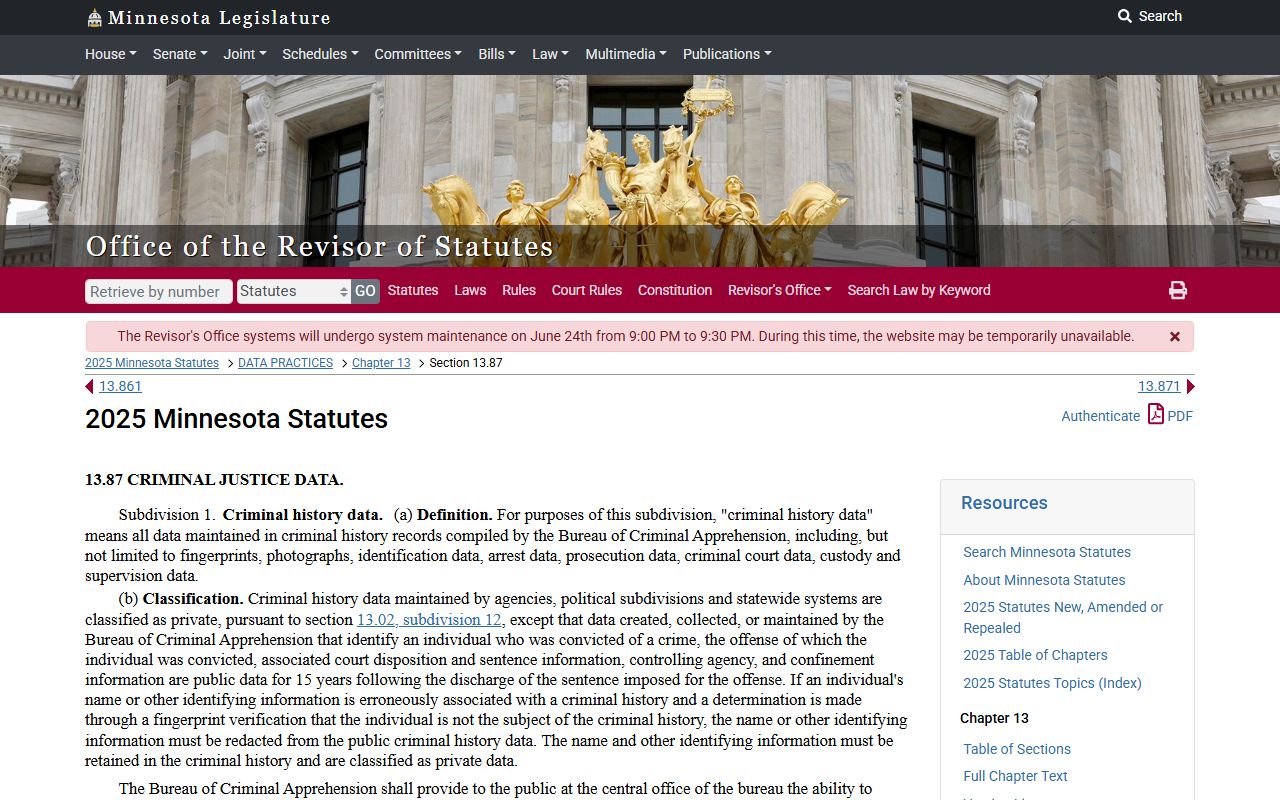
The criminal-history statute image closes the loop on the access rules and shows why a public search may reveal only part of the charge path.